
How Winter Road Salt and Freeze-Thaw Cycles Damage New Jersey Garage Floors — and What to Do About It
North Brunswick, United States - March 12, 2026 / Concrete Refresh /
As winter's freeze-thaw cycles give way to warmer spring temperatures, concrete flooring professionals across New Jersey are urging homeowners to inspect garage, basement, and patio surfaces for damage before small cracks become costly structural problems. With homeowner remodeling expenditures projected to reach $524 billion in early 2026, according to the Harvard Joint Center for Housing Studies, spring remains one of the busiest seasons for concrete floor repair and protective coating installations.
Eric, owner of Concrete Refresh, a Central New Jersey concrete flooring company with more than 15 years of experience, said the weeks following the last freeze are the most critical window for homeowners to evaluate their concrete surfaces.
"Every winter, we see homeowners who waited too long to address hairline cracks from the previous year," Eric said. "By the time spring arrives, those cracks have widened from repeated freezing and thawing, and what could have been a simple repair becomes a much larger project."
How Freeze-Thaw Cycles Damage Concrete
Concrete is a porous material, meaning it absorbs moisture from rain, snowmelt, and humidity. When temperatures drop below freezing, that trapped water expands by approximately 9 percent, exerting internal pressure that can exceed 30,000 pounds per square inch. Over the course of a New Jersey winter, where temperatures can swing above and below freezing dozens of times between December and March, this repeated expansion and contraction creates a cumulative effect — widening existing cracks, causing surface spalling, and eventually compromising the structural integrity of the slab.
Garage floors face additional risk from road salt and deicing chemicals tracked in on vehicle tires. These chloride-based compounds lower the freezing point of water within the concrete pores, increasing the number of freeze-thaw cycles the slab experiences and accelerating surface deterioration. In a state where municipalities apply thousands of tons of road salt each winter, unprotected garage floors bear the brunt of this chemical exposure.
Why Spring Is the Right Time to Act
Industry data reflects a growing awareness among homeowners about the importance of proactive floor maintenance. According to Angi's 2025 State of Home Spending Pulse Report, 71 percent of homeowners are now prioritizing preventative maintenance to avoid costlier repairs later — nearly twice the rate of those undertaking full-scale renovations. For concrete surfaces, that preventative approach often means applying a protective coating system before another winter compounds existing damage.
Spring offers ideal conditions for concrete coating installations. Epoxy, polyurethane, and urethane cement systems require ambient temperatures between 50 and 90 degrees Fahrenheit and low humidity for proper curing. In New Jersey, the March-through-May window provides these conditions consistently, allowing coatings to achieve full chemical bond strength before summer heat or the following winter's freeze cycles.
"We tell homeowners that spring is really the sweet spot," Eric said. "The temperatures are right for proper curing, and you get the full benefit of the coating before it has to withstand another winter. Waiting until fall means rushing the timeline."
What Homeowners Should Look For
A post-winter inspection should focus on several key indicators. Surface spalling — where the top layer of concrete flakes or peels away — is the most visible sign of freeze-thaw damage. Hairline cracks that were not present the previous spring suggest moisture infiltration and expansion. Uneven surfaces or areas where the slab has settled can indicate soil movement beneath the concrete caused by frost heave. Discoloration or white, powdery deposits known as efflorescence on the surface signal that moisture is actively migrating through the slab.
Homeowners should also test for moisture by taping a plastic sheet to the floor for 24 hours. If condensation forms under the plastic, moisture mitigation will be necessary before any coating system can be applied successfully.
Protective Coating Options
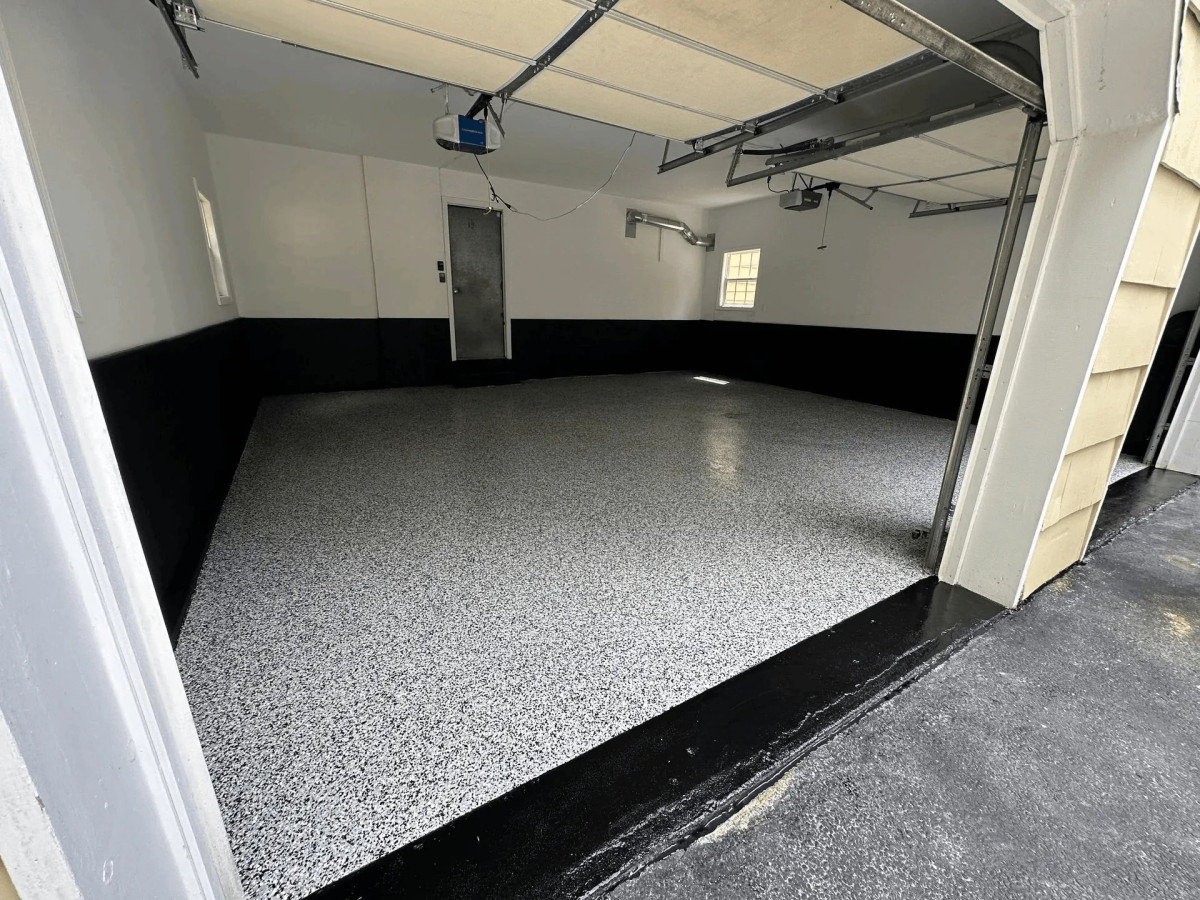
The epoxy floor coating market, valued at $2.43 billion in 2024, is projected to reach $3.72 billion by 2032, according to Verified Market Research — growth driven in part by residential homeowners seeking durable alternatives to bare concrete. Modern coating systems create a seamless, non-porous barrier that prevents moisture infiltration, resists chemical spills from automotive fluids, and withstands the abrasion of vehicle traffic and heavy equipment.
For areas exposed to extreme temperature swings, urethane cement systems provide thermal shock resistance that standard epoxy cannot match. Polyurethane topcoats add UV stability for outdoor applications like patios and pool decks. The right system depends on the specific environment, expected traffic, and exposure conditions — factors a qualified installer can evaluate during an on-site assessment.
Homeowners seeking epoxy flooring services in New Jersey or post-winter concrete assessment can contact Concrete Refresh at (908) 208-3698 for a free, no-obligation estimate.
About Concrete Refresh
Founded more than 15 years ago, Concrete Refresh is a licensed and insured concrete flooring company based in North Brunswick, New Jersey. The company specializes in epoxy coatings, concrete polishing, decorative overlays, urethane cement systems, and concrete leveling for residential, commercial, and industrial clients across Central New Jersey, including Middlesex, Mercer, and Somerset counties. All installations carry a five-year workmanship warranty.
Contact Information:
Concrete Refresh
1150 Newton St. Unit C
North Brunswick, NJ 08902
United States
Eric Smith
(908) 208-3698
https://njepoxyflooring.com