Austin, TX, March 05, 2026 (GLOBE NEWSWIRE) -- This article contains affiliate links. If a purchase is made through these links, a commission may be earned at no additional cost to the buyer. This article is an informational overview and does not constitute medical, health, or dietary advice. All product details described below are stated as presented by the company and should be verified directly on the official website before any purchasing decision. The terms "medicinal" and "remedy" as used throughout this article reflect the company's own marketing language and traditional herbal nomenclature. They do not indicate that any plant, seed, or preparation included in the Medicinal Garden Kit has been evaluated or approved by the FDA for the diagnosis, treatment, cure, or prevention of any disease.
Interest in medicinal herb gardening has grown significantly over the past several years as more consumers explore traditional plant-based wellness practices, self-sufficiency gardening, and the idea of growing their own herbal preparations at home. One product that appears frequently across social media, survival preparedness communities, and herbal wellness forums is the Medicinal Garden Kit — a seed collection marketed around the concept of building a "backyard pharmacy" using 10 traditional medicinal herbs.
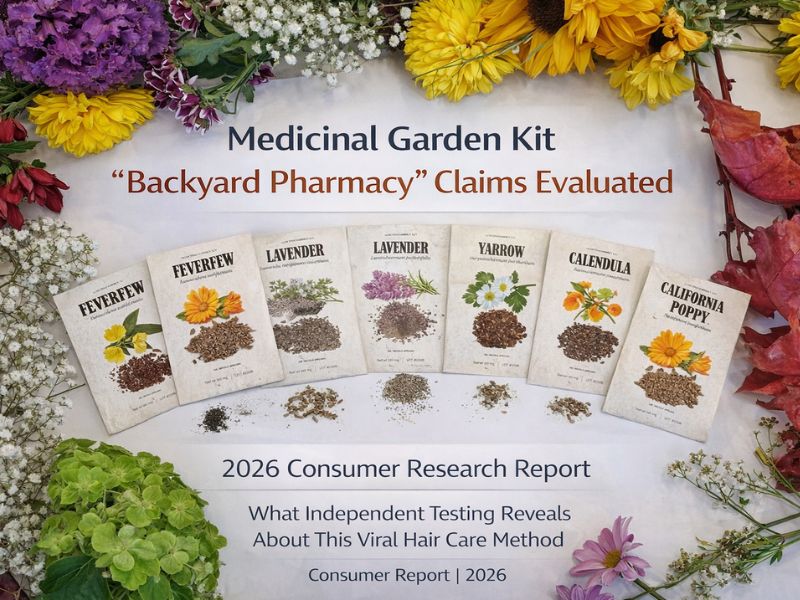
This 2026 consumer research report examines the marketing claims associated with the Medicinal Garden Kit, the traditional uses of the herbs included in the herbal seed system, and how those claims compare with publicly available herbal research and historical plant medicine documentation. The report also covers the product's pricing structure, refund terms, and the questions consumers may want to answer for themselves before making a purchase decision.
This articles purpose is to analyze publicly available information about the Medicinal Garden Kit and the traditional herbal uses referenced in its marketing materials, so that consumers researching this product can make their own informed decisions based on accurate context.
Current product details, pricing, and terms can be confirmed by viewing the current Medicinal Garden Kit offer on the official website.
Individual results vary. Herbal preparations made from home-grown plants are not substitutes for professional medical care, prescribed medications, or emergency treatment. Consult a qualified healthcare provider before using any herbal remedy, especially if you take medications, have existing health conditions, or are pregnant or nursing.
What Is the Medicinal Garden Kit
The Medicinal Garden Kit is a medicinal herb garden kit marketed by Nicole Apelian, Ph.D., through the website medicinalkit.com. According to the official website, the kit contains seeds for 10 medicinal plants along with a printed companion guide titled Herbal Medicinal Guide: From Seeds to Remedies. The guide provides planting instructions and directions for preparing herbal tinctures, salves, poultices, decoctions, infusions, and oils from the harvested plants.
The company states that the Medicinal Garden Kit seeds are non-GMO and sourced from premium plants, with the kit packaged in the United States. Purchases are processed through ClickBank, which serves as the authorized retailer. The company behind the product is listed as Global Brother SRL in the website's terms and conditions.
An important distinction worth understanding upfront: this is not a dietary supplement, pharmaceutical, or pre-made herbal extract. It is a seed kit paired with educational materials. Buyers are purchasing raw seeds and a guide — not a finished health product. Any herbal preparations made from the grown plants would be the consumer's own creation, with compound concentrations that depend entirely on growing conditions, harvest timing, and preparation methods.
Who Is Nicole Apelian
According to the company's published materials, Nicole Apelian holds a degree in Biology from McGill University and a Ph.D. Her background includes work as an herbalist, biologist, and survival skills instructor. The website states that she lived among the San Bushmen in the Kalahari, studying traditional plant-based practices used by indigenous communities.
The company's marketing materials describe her personal health journey with Multiple Sclerosis, stating that she has discussed managing aspects of her condition through lifestyle and natural approaches she practices. According to the website, she survived 57 days in the wilderness on the History Channel's TV show Alone — a detail that is independently verifiable through public broadcast records.
Her academic credentials appear on public professional profiles. However, her personal health experience with MS represents an individual account and should not be interpreted as evidence that herbal remedies can treat, manage, or replace medical care for Multiple Sclerosis or any other condition. MS is a complex autoimmune disease with highly variable progression patterns.
Understanding the "Backyard Pharmacy" Concept
The central marketing message behind the Medicinal Garden Kit is that consumers can grow a natural pharmacy garden in their own backyard. This concept connects three areas of growing consumer interest: traditional herbal medicine, self-reliance gardening, and the broader homesteading movement.
The idea itself has genuine historical roots. Humans have cultivated and used plants for health-related purposes throughout recorded history across virtually every civilization. Many modern pharmaceuticals were originally derived from plant compounds — aspirin from willow bark, morphine from poppies, and digoxin from foxglove are well-known examples. Growing herbs with traditional medicinal applications is a legitimate hobby and cultural practice with deep historical foundations.
Where the concept calls for careful perspective is in the word "pharmacy." The phrase "backyard pharmacy" reflects marketing language used to describe growing traditional medicinal herbs at home. It does not imply the ability to replace licensed pharmacies or medical treatment. Actual pharmacies dispense rigorously tested, standardized, quality-controlled medications prescribed by licensed practitioners for diagnosed conditions. A garden of 10 medicinal herbs — while potentially useful for minor home wellness applications — does not replicate that capability. Understanding this distinction helps set realistic expectations about what any medicinal herb garden can and cannot provide.
Traditional Uses of the Herbs Included in the Medicinal Garden Kit
The Medicinal Garden Kit includes seeds for 10 herbs. The company's marketing describes specific traditional uses for each plant, often using terms associated with pain relief and antimicrobial properties. Below is a look at what traditional herbal literature and published research actually describe for each included plant.
A note that applies throughout this section: traditional herbal use does not constitute clinical proof of effectiveness. Historical plant medicine traditions differ significantly from modern pharmaceutical research standards. Dosage, preparation method, plant potency, growing conditions, and individual health factors all influence whether any home-prepared herbal remedy produces a meaningful effect.
Chicory — What Traditional Literature Describes
The company describes chicory as a plant "traditionally used for discomfort," terminology commonly used in traditional herbal literature referencing its historical use by Native American communities. The website highlights chicoric acid as an active compound with anti-inflammatory properties.
Chicory root does contain chicoric acid, inulin, and other bioactive compounds documented in botanical literature. Some preliminary studies have examined chicory's anti-inflammatory properties in laboratory and animal models. A 2020 review in the journal Phytotherapy Research noted that chicory extracts demonstrated anti-inflammatory activity in preclinical settings. The plant's traditional use as a digestive aid and prebiotic source through its inulin content has somewhat broader documentation across European and American folk medicine traditions.
Large-scale human clinical trials specifically evaluating chicory root preparations as a pain reliever are limited in the published literature. The traditional-use history is well-documented, but consumers should understand the difference between historical folk use and clinically validated pain-management approaches.
Yarrow — What Traditional Literature Describes
Marketing materials describe yarrow as a "backyard wound healer." Traditional herbal literature extensively documents yarrow (Achillea millefolium) as a wound herb across multiple cultures — the common name "soldier's woundwort" reflects centuries of documented folk use for bleeding wounds across European, Native American, and Asian traditions.
A 2011 study in the Journal of Ethnopharmacology noted traditional wound-healing applications across numerous cultures, and some published research has examined yarrow's hemostatic and antimicrobial properties in preclinical settings. However, most available evidence comes from traditional-use documentation and laboratory studies rather than controlled human clinical trials comparing yarrow preparations to modern wound care protocols.
For serious wounds, cuts, or infections, professional medical treatment remains the appropriate standard of care regardless of what herbal preparations may be available.
California Poppy — What Traditional Literature Describes
Marketing materials compare California poppy to pharmaceutical sleep medications — a comparison that captures significant search interest. Traditional herbal literature does document California poppy (Eschscholzia californica) as a mild sedative in Native American and folk medicine traditions.
Some preliminary studies have examined its alkaloid content and potential sedative effects. A 2014 study in Phytomedicine found that a combination product containing California poppy extract showed modest effects on sleep quality in a small trial. The evidence base for California poppy as a standalone sleep remedy remains limited compared to more extensively studied botanicals.
The marketing comparison extends beyond what published research currently supports for home-prepared California poppy tea or tincture. Consumers dealing with persistent sleep issues should discuss those concerns with a healthcare provider.
Marshmallow — What Traditional Literature Describes
The company describes marshmallow root as containing mucilage that coats and soothes the digestive tract. Marketing materials reference its use for heartburn, indigestion, and digestive discomfort.
Marshmallow root (Althaea officinalis) does contain mucilage polysaccharides, and its demulcent properties have been documented in traditional European herbal medicine for centuries. The European Medicines Agency (EMA) has recognized marshmallow root as a traditional herbal medicine for soothing irritation of the mouth and throat and for mild gastrointestinal discomfort based on long-standing use. Clinical evidence from controlled human trials for more serious digestive conditions remains limited.
Serious digestive conditions require proper medical diagnosis and treatment. Herbal preparations may complement but should not replace professional medical care for diagnosed gastrointestinal conditions.
Chamomile — What Traditional Literature Describes
The company presents chamomile as a versatile remedy and uses the phrase "natural antibiotic" in its marketing. Traditional herbal literature extensively documents chamomile (Matricaria chamomilla) across multiple cultures for digestive comfort, mild relaxation, and topical skin applications.
A 2010 review in Molecular Medicine Reports noted that chamomile preparations have been used for centuries and that modern research has identified anti-inflammatory, antioxidant, and mild sedative properties. Chamomile tea for mild digestive discomfort and relaxation has reasonable traditional-use support across published ethnobotanical literature.
The term "natural antibiotic" is a marketing characterization sometimes used in herbal wellness contexts but not recognized as a clinical classification. While chamomile has demonstrated some antimicrobial activity in laboratory studies, it should not be considered a replacement for antibiotic medications when bacterial infections require medical treatment.
Evening Primrose, Lavender, Echinacea, Calendula, and Feverfew
The remaining five herbs in the Medicinal Garden Kit — evening primrose, lavender, echinacea, calendula, and feverfew — each has its own traditional-use history documented in herbal literature.
Evening primrose is described in the marketing as a skin and nerve remedy. Published research has examined evening primrose oil for eczema, nerve discomfort, and hormonal support, though a Cochrane Review found insufficient evidence to recommend it for eczema specifically. Home-grown preparations would produce different concentrations than the standardized oil used in published studies.
Lavender marketing references a published study comparing a standardized lavender oil preparation to Lorazepam for anxiety. That study does exist — published in Phytomedicine in 2010 — but it tested a specific pharmaceutical-grade oral lavender oil capsule (Silexan/Lavela), not home-grown lavender or homemade tinctures. The gap between a standardized commercial extract and a garden-to-cup preparation is significant.
Echinacea is positioned as an immunity plant. A 2014 Cochrane Review found some evidence of modest benefit for the common cold but noted inconsistency across preparations, species, and dosages. The claim that home-grown echinacea is inherently superior to commercial preparations lacks supporting evidence — standardized extracts actually offer more consistent compound concentrations.
Calendula has reasonable traditional-use documentation for topical wound care. A 2019 review noted evidence for accelerating wound healing in acute settings. Feverfew has been studied for migraine prevention, with some clinical trials showing modest benefit for reducing migraine frequency. Both plants have traditional-use foundations with some supporting preliminary research.
Traditional Herbal Knowledge vs. Modern Clinical Research
If you're researching medicinal herbs to grow at home, one of the most important distinctions you can understand is how traditional herbal knowledge relates to modern clinical evidence. Getting this right changes how you think about any herbal product — not just this one.
Traditional herbal medicine represents centuries of observational knowledge passed through cultures. Many of these observations have genuine biological foundations — plants do contain bioactive compounds, and many of those compounds have measurable effects in laboratory and animal studies. This historical knowledge is valuable and should not be dismissed.
That said, traditional use and modern clinical proof are not the same thing. Clinical research standards call for randomized controlled trials with defined populations, specific dosages, measurable endpoints, and peer-reviewed publication. Most herbs — including the 10 in the Medicinal Garden Kit — have traditional-use documentation that far exceeds their clinical trial evidence. That does not mean the traditional uses are wrong. It means they have not been confirmed to the standard that modern medicine requires before making specific health claims.
For consumers building a survival herb garden or exploring herbal healing plants as a hobby, this context helps set expectations. Growing and learning about these plants can be genuinely rewarding and educational. Relying on them as a complete replacement for medical care is a different matter entirely.
Who the Medicinal Garden Kit May Be Intended For
Consumers interested in herbal gardening as a hobby or learning pursuit. The kit provides a curated starting point for growing 10 traditional medicinal herbs with a companion guide explaining historical preparations. For gardeners looking to expand into medicinal plants, it offers a structured introduction.
Individuals studying traditional plant uses and ethnobotany. The included guide teaches preparation methods that have historical documentation across multiple cultures. For people interested in plant medicine traditions, the combination of seeds and instruction provides hands-on context.
People exploring self-reliance gardening and preparedness. The kit aligns with homesteading and preparedness values. Having knowledge of plant-based preparations for minor situations represents practical traditional knowledge — particularly when understood as supplementary to, not a replacement for, professional medical care.
The kit may be less aligned with consumers who need treatment for diagnosed medical conditions, those who expect clinical-grade herbal products with standardized dosing, or people in climates or living situations that don't support outdoor herb gardening.
Questions Consumers Should Ask Before Ordering
If you are considering the Medicinal Garden Kit, these questions are worth thinking through before purchasing.
What herbs are included in the Medicinal Garden Kit? According to the official website, the kit includes seeds for chicory, yarrow, California poppy, marshmallow, chamomile, evening primrose, lavender, echinacea, calendula, and feverfew. All 10 have documented traditional uses in herbal literature.
Are medicinal herb gardens supported by research? The individual herbs have varying levels of published research — from chamomile and echinacea (relatively well-studied) to chicory and California poppy (more limited clinical evidence). Traditional use is well-documented across cultures, but traditional use differs from clinical proof. Herbal preparations made from home-grown plants are not standardized medical products.
How does herbal gardening differ from medical treatment? Growing and preparing herbs at home involves variable plant potency, inconsistent compound concentrations, and preparation methods that differ significantly from the standardized extracts used in published research. Herbal remedies should never replace professional medical care or prescribed treatments. Historical plant medicine traditions differ significantly from modern pharmaceutical research standards.
Can medicinal herbs replace pharmaceuticals? No. The company's own website disclaimers describe the product information as educational, not medical. Anyone currently taking prescription medications should consult their physician before adding herbal preparations to their regimen, and should never modify prescribed treatment without medical guidance.
What guarantees or policies are listed by the company? According to the official website, the Medicinal Garden Kit includes a 365-day money-back guarantee. Consumers who are dissatisfied within the first year can return the seed pack and request a full refund. Refund requests can be directed to support@thelostherbs.com or processed through ClickBank's self-service portal.
Medicinal Garden Kit Pricing and Purchase Terms
Per the official website, the Medicinal Garden Kit is listed at $59. The company describes the purchase as including the 10-seed collection plus the printed Herbal Medicinal Guide: From Seeds to Remedies. The website also describes two bonus guides included at no additional charge: Healing Yourself at Home With Household Items and Wild Edible and Medicinal Herbs You Can Forage or Find Around the House.
The company states that all purchases are processed through ClickBank as the authorized retailer and that this is a one-time purchase with no subscriptions or automatic rebilling. Pricing, bonus availability, and shipping terms can change, so consumers should verify current terms by viewing the current Medicinal Garden Kit offer on the official website.
Refund Policy and 365-Day Guarantee
The company's published refund policy describes a 365-day money-back guarantee. According to the published terms, consumers who are dissatisfied within the first year of purchase can return the seed pack and request a full refund.
The published return address is: Claude Davis / Capital Printing, 4001 Caven Rd, Austin, TX 78744-1121 US. Refund questions can be directed to support@thelostherbs.com. Refund requests can also be initiated through ClickBank's self-service billing portal.
Consumers should review the complete refund policy on the official website and retain all purchase confirmation details before making a purchase decision. Current refund terms and policy details are available by checking the current Medicinal Garden Kit terms on the official website. According to the company's terms of service, dispute resolution is governed by Romanian law — a detail worth noting when evaluating how warranty claims or refund disputes would be handled.
Additional Context for Consumer Research
A few additional details may be worth reviewing for consumers conducting their own due diligence on the Medicinal Garden Kit.
Previously published consumer reporting. Consumers researching the Medicinal Garden Kit may benefit from reviewing a previously published consumer report examining the Medicinal Garden Kit's herbal seeds, remedy guide, and product structure, which provides additional context on the kit's components, Nicole Apelian's background, and the product's positioning within the herbal wellness category.
Company structure. According to the website's Terms and Conditions, the operating entity is Global Brother SRL, with disputes subject to arbitration in Bucharest, Romania. The return address is located in Austin, Texas, and payment processing is handled by ClickBank (Click Sales Inc.) in Boise, Idaho.
Product category context. The herbal wellness and preparedness product space has attracted growing consumer interest alongside increased scrutiny from consumer protection agencies regarding health-related marketing claims. Consumers should verify the most current information about any product's claims and standing before purchasing.
What this product is and is not. The Medicinal Garden Kit is a seed collection paired with an educational herbal remedy guide. It is not a dietary supplement, not a pharmaceutical product, and not a standardized herbal extract. The value it provides depends significantly on what the buyer expects. As an introduction to herbal gardening and traditional plant knowledge, it serves one purpose. As a replacement for medical care, it serves a fundamentally different purpose that the product is not designed to fill.
Consumers who have completed their own research and want to explore the full product details can do so. Complete product information, current pricing, and published terms are available by viewing the current Medicinal Garden Kit offer on the official website.
Contact Information
Product: Medicinal Garden Kit
Website: medicinalkit.com
Return Address: Claude Davis / Capital Printing, 4001 Caven Rd, Austin, TX 78744-1121 US
Email: support@thelostherbs.com
Payment Processor: Click Sales Inc. (ClickBank), 1444 S. Entertainment Ave., Suite 410, Boise, ID 83709
Self-Service Billing Support: https://www.clkbank.com/
USA: 1-800-390-6035
INT: +1-208-345-4245
Disclaimers
Content and Consumer Information Disclaimer: This article is an independent informational overview and does not constitute medical, health, dietary, or legal advice. All product details, pricing, and policy terms described in this article are stated as presented by the company on its publicly available website. This content has not been independently audited or verified unless specifically noted. Readers are encouraged to verify all claims directly with the manufacturer and to consult a qualified healthcare professional before beginning any herbal remedy regimen.
Herbal Wellness Notice: Herbal preparations made from home-grown plants are not standardized health products. Plant compound concentrations vary based on growing conditions, harvest timing, soil quality, climate, and preparation methods. Traditional use of plants for health purposes does not constitute clinical proof of efficacy for any specific condition. The plants described in this article have not been evaluated by the FDA as treatments for any disease or medical condition. Never use herbal preparations as a replacement for prescribed medical treatment without consulting your healthcare provider.
Professional Medical Disclaimer: This article is educational and does not constitute medical advice. If you are currently taking medications, have existing health conditions, are pregnant or nursing, or are considering any major changes to your health regimen, consult your physician before using any herbal remedy. Do not change, adjust, or discontinue any medications or prescribed treatments without your physician's guidance and approval.
Results, Pricing, and Product Variability: All pricing, bonus offers, shipping terms, and refund policies referenced in this article are based on information published on the official product website at the time of writing (March 2026) and may change without notice. Consumers should verify current terms through the official website or the authorized payment processor before completing any purchase. Gardening results vary based on climate, soil conditions, growing experience, and geographic location.
FTC Affiliate Disclosure and Publisher Responsibility: This article contains affiliate links. If a product is purchased through these links, a commission may be earned at no additional cost to the buyer. Click Sales Inc. (ClickBank) serves as the authorized payment processor for this product. ClickBank's role as retailer does not constitute an endorsement, approval, or review of this product or any claim, statement, or opinion used in its promotion. The publisher of this article is not responsible for typographical errors, manufacturer changes to the product after publication, or individual consumer outcomes.

Email: support@thelostherbs.com