FDA Advisory Panel Backs BPC-157 for 503A Bulks List in 8-6-1 Vote, Promise Analysis Finds
PR Newswire
SCOTTSDALE, Ariz., Sept. 8, 2026
The July 2026 recommendation is non-binding and does not make BPC-157 FDA-approved; FDA staff proposed against inclusion, while a 2025 systematic review found 35 preclinical studies and one clinical study in scope.
SCOTTSDALE, Ariz., Sept. 8, 2026 /PRNewswire/ -- A July 2026 vote by the FDA Pharmacy Compounding Advisory Committee has put renewed attention on the regulatory status of BPC-157. According to client-supplied records and Promise's current regulatory article, committee members voted 8-6-1 to recommend adding both BPC-157 free base and BPC-157 acetate to the Section 503A Bulks List.
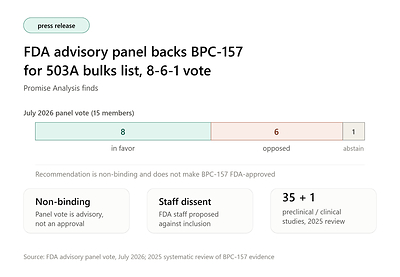
The recommendation is advisory, not final FDA action. Rulemaking remains pending, and BPC-157 is not FDA-approved. Promise's analysis finds that this distinction is central for patients trying to understand what the committee vote changed and what it did not. That distinction matters when patients encounter headlines about the committee vote.
The advisory vote did not approve BPC-157
FDA materials confirm that the committee considered BPC-157 free base and acetate during its July 23, 2026 meeting. FDA also states more broadly that advisory committee recommendations are non-binding.
FDA review staff had proposed that neither form be added to the 503A Bulks List. The favorable committee recommendation reflects disagreement between advisory members and FDA staff rather than an FDA endorsement.
FDA's BPC-157 briefing document also states that neither form has an applicable USP/NF drug-substance monograph and neither is a component of an FDA-approved drug. Inclusion on a compounding bulks list, if ultimately completed through rulemaking, would still not make a compounded preparation FDA-approved.
Human evidence remains limited
The regulatory discussion also comes against a limited human evidence base. A 2025 systematic review in HSS Journal identified 36 studies that met its inclusion criteria. Of those, 35 were preclinical and one was clinical. The review reported that it found no clinical safety data.
That imbalance matters because findings from laboratory or animal studies should not be translated into claims about human treatment outcomes. The available research can describe what has been studied, but it does not justify promises about safety, efficacy, healing, or recovery.
For patients, that means the committee vote should be understood as part of a regulatory process rather than as confirmation of clinical benefit.
Prescription access remains clinician-gated
Promise operates a doctor-guided telehealth platform in which treatment requests begin with an online medical evaluation. A licensed physician reviews the information and decides whether a prescription is appropriate.
If prescribed, the preparation is compounded and dispensed by a licensed U.S. pharmacy. The company says nothing is sold without provider review. That process is operational context, not evidence that BPC-157 is safe or effective, and provider approval is not automatic.
Methodology
Promise synthesized FDA materials from the July 2026 Pharmacy Compounding Advisory Committee meeting, FDA's BPC-157 briefing document, FDA guidance on compounded drugs, a 2025 peer-reviewed systematic review, and client-supplied operational information. No proprietary patient-outcome survey or efficacy dataset was used.
Frequently Asked Questions
The following questions address the regulatory status of BPC-157, the evidence base, and how clinician-guided access works.
What did the July 2026 advisory vote change?
The committee recommended adding BPC-157 free base and acetate to the Section 503A Bulks List. The recommendation is non-binding and did not itself complete FDA rulemaking.
Is BPC-157 FDA-approved?
BPC-157 is not FDA-approved, and compounded preparations are not FDA-approved drugs. The advisory vote did not change that status.
How much human evidence is available?
The 2025 systematic review included 36 studies, with 35 preclinical studies and one clinical study. It reported finding no clinical safety data.
How is BPC-157 prescribed through Promise?
The process begins with an online medical evaluation. A licensed physician determines whether prescribing is appropriate, and a licensed pharmacy compounds and dispenses the preparation if a prescription is issued.
About Promise
Promise is a doctor-guided telehealth platform founded in 2026 and based in Scottsdale, Arizona. It provides access to peptide therapy, weight management, and hormone care through licensed-provider review. BPC-157 is one of the compounded peptide programs offered through the platform.
Media Contact
Contact: Max Power
Email: stacey@mypromise.com
Location: Scottsdale, AZ
 View original content to download multimedia:https://www.prnewswire.com/news-releases/fda-advisory-panel-backs-bpc-157-for-503a-bulks-list-in-8-6-1-vote-promise-analysis-finds-302872695.html
SOURCE Promise (mypromise.com)