Elsevier Foundation Chemistry for Climate Action Challenge 2026: turning waste into climate action
PR Newswire
AMSTERDAM, May 26, 2026
Two pioneering projects from Sri Lanka and Malawi win USD 25,000 each for green chemistry solutions addressing deforestation and energy poverty
AMSTERDAM, May 26, 2026 /PRNewswire/ -- The winners of the Elsevier Foundation Chemistry for Climate Action Challenge have been announced at the 10th Green & Sustainable Chemistry Conference in Dresden, Germany. The two winning projects deliver innovative, concrete and scalable responses to climate change. Selected from 285 proposals, the award winners will each receive a USD 25,000 cash prize. The projects tackle deforestation and energy poverty while empowering communities in Sri Lanka and Malawi. Now in its tenth edition, the Challenge has supported 20 winning projects across 19 countries.
The winners are Prof. Thilini D. K. Mudiyanselage, Professor in the Department of Polymer Science, University of Sri Jayewardenepura, Sri Lanka (together with Dr. Amila K. Jeewandara, University of Kelaniya), and Milemo Lusambya, founder and leader of Let's Be Transformed (MAGUFINA), Dzaleka Refugee Camp, Malawi. All five finalists were invited to present their solutions to a jury of scientific experts at the Elsevier Green & Sustainable Chemistry Conference.
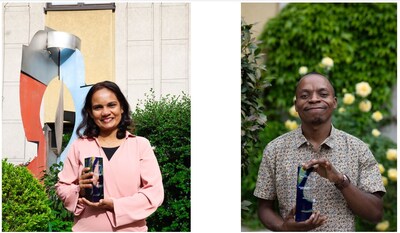
The Elsevier Foundation Chemistry for Climate Action Challenge is a collaboration between the Elsevier Foundation, a nonprofit focused on inclusive research and health funded by Elsevier, and its sustainable chemistry journals team. The Challenge represents a commitment from Elsevier to uncover practical, scalable solutions to specific issues caused by climate change, in Global South communities.
"Reaching the tenth edition of the Chemistry for Climate Action Challenge is a special moment for me personally, having been part of the jury since the very beginning," said Prof. Dr. Klaus Kümmerer, Chair, Scientific Jury and Green & Sustainable Chemistry Conference. "Looking back, it is both extremely rewarding and impressive what the past awardees have achieved and how the award contributed to it. Both winning projects of this year show again how green chemistry and sustainable chemistry can generate real, tangible solutions to the climate challenges communities face today. My warmest congratulations to the winners, and my sincere gratitude to every applicant who brought their science and their dedication to this challenge."
"On its 10th anniversary, the Chemistry for Climate Action Challenge continues to inspire us with concrete and ingenious solutions to real problems," said Ylann Schemm, Executive Director of the Elsevier Foundation. "What strikes me most is that our winners start with what others have thrown out.. Prof. Mudiyanselage and Amila Dr. Jeewandara see lumber waste and imagine an alternative to deforestation, while Milemo Lusambya uses organic waste in an overcrowded refugee camp to buildan entire circular economy that powers homes, improves health, and puts women in charge. That combination of scientific innovation and community purpose is exactly what this Challenge was created to recognize."
Sawdust reborn: turning a workshop byproduct into a sustainable wood alternative
Sri Lanka | Prof. Thilini D. K. Mudiyanselage & Dr. Amila K. Jeewandara
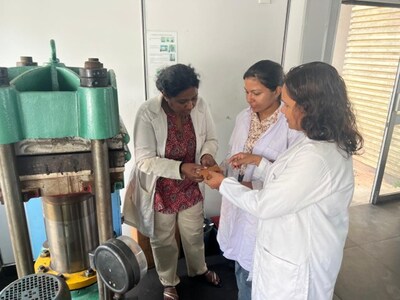
Prof. Mudiyanselage and Dr. Jeewandara started from a straightforward observation: the timber industry generates vast quantities of sawdust that typically ends up as low-grade fuel. Their innovation was to flip sawdust from byproduct to primary material, binding it at high concentration with natural rubber latex to produce wood-like sheets that match or exceed the strength, flexibility and moisture resistance required by international construction material standards. Over 90% of the composite is sustainable, with no toxic resins.
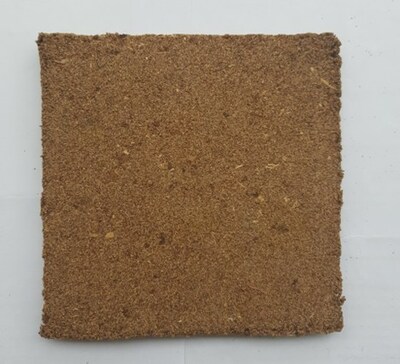
The technology requires no advanced machinery, making it viable for small-scale manufacturers and creating employment opportunities for women. The Challenge prize will fund a pilot plant at the University of Sri Jayewardenepura, moving this from a promising laboratory result to a product ready for market.
"This idea started with a simple thought, timber is a valuable resource, so are we really using all of it? By focusing on what we usually discard, like sawdust, we were able to create a strong alternative to timber. That is the beauty of this work," said Prof Thilini Mudiyanselage. "It also comes from a mindset shaped during times of economic challenge, where we learned to make the most of every resource. This recognition means a great deal to us, both personally and professionally, and we look forward to learning from and working with this inspiring global community."
Circular biomass solutions: clean energy, biochar and menstrual health in Dzaleka Refugee Camp
Malawi | Milemo Lusambya, Let's Be Transformed (MAGUFINA)
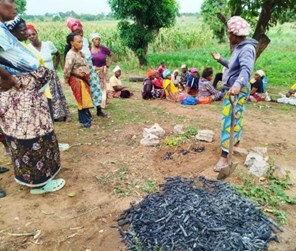
The Dzaleka Refugee Camp, a settlement in central Malawi originally built for 10,000 people, now hosts over 56,000 refugees. It faces three interlocking crises: 89% of households burn charcoal or firewood, driving Malawi's 2.8% annual deforestation rate; women spend 4.8 hours a day collecting fuel; and 68% lack access to menstrual products, costing them around four working days a month. Milemo Lusambya and MAGUFINA address all three at once through a circular biomass system that converts 1,000 kg of organic waste monthly into biochar, clean-burning fuel briquettes, and biodegradable sanitary pads, using zero synthetic chemicals and 60% less energy than industrial methods.
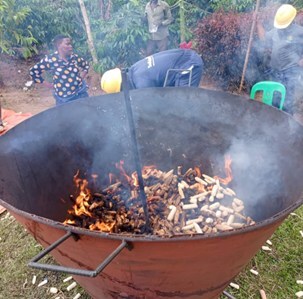
Women's cooperatives own and run the facilities, retaining 70% of revenues. The Challenge prize will fund the construction of the processing facility and training of the first cohort of women, with the project designed to become financially self-sustaining over time.
"This prize is not just $25,000. It is 40 jobs for women who currently earn nothing," said Milemo Lusambya. "It is 300 women in Dzaleka who will finally have menstrual health access. It is cleaner air for 56,000 people. It is forests that will not be cut down. It is a model that UNHCR will replicate across East Africa."
Gender equity at the heart of the Challenge
The Challenge requires all projects to integrate a gender dimension — recognising that climate change does not affect everyone equally, and that women in low-resource settings often bear the heaviest burdens. This year's two winners reflect that commitment in practice. Prof. Mudiyanselage and Dr. Jeewandara have designed a production process specifically accessible to women with limited prior experience, creating a tangible pathway to employment in communities where such opportunities are scarce. In Dzaleka, where women spend nearly five hours a day collecting fuel and many lack access to basic menstrual health products, MAGUFINA places women at the centre, as owners, decision-makers, and primary beneficiaries of the project's revenues.
Notes for editors
More information about the winning and shortlisted projects and the teams behind them is available on request.
About the Elsevier Foundation
The Elsevier Foundation contributes a million USD a year to non-profit organizations through partnerships which incubate new approaches, highlight inequities, and catalyse change toward the UN Sustainable Development Goals. Funded by Elsevier, a global information analytics company specializing in science and health, the Elsevier Foundation is part of Elsevier's wider corporate responsibility program. By leveraging Elsevier's networks and unique insights in content, data and analytics, the Elsevier Foundation is able to expand its impact in gender, health, climate action and reduced inequalities. Since 2005, the Elsevier Foundation has contributed over $19 million in grants to over 100 partners in 70 countries around the world. In addition, the Elsevier Foundation offers a special fund to support disaster relief, matching employees' donations, and volunteering to enable employees to work closely with Foundation partners and support their communities. www.elsevierfoundation.org/
About Elsevier
Elsevier is a global leader in advanced information and decision support. For over a century, we have been helping advance science and healthcare to advance human progress. We support academic and corporate research communities, doctors, nurses, future healthcare professionals and educators across 170 countries in their vital work. We do this by delivering mission-critical insights and innovative solutions that combine trusted, evidence-based scientific and medical content with cutting-edge AI technologies to help impact makers achieve better outcomes. We champion inclusion and sustainability by embedding these values into our products and culture, working with the communities that we serve. The Elsevier Foundation supports research and health partnerships around the world.
Elsevier is part of RELX, a global provider of information-based analytics and decision tools for professional and business customers. For more information, visit www.elsevier.com and follow us on social media @ElsevierConnect.
Photo - https://mma.prnewswire.com/media/2986111/Prof_Thilini_D_K_Mudiyanselage_and_Milemo_Lusambya.jpg
Photo - https://mma.prnewswire.com/media/2986112/Prof_Mudiyanselage_and_Dr__Jeewandara.jpg
Photo - https://mma.prnewswire.com/media/2986113/Sawdust_natural_rubber_latex_composite.jpg
Photo - https://mma.prnewswire.com/media/2986114/Women_from_Dzaleka_Refugee_Camp.jpg
Photo - https://mma.prnewswire.com/media/2986115/Biomass_processing_Dzaleka_Refugee_Camp.jpg
Logo - https://mma.prnewswire.com/media/2717688/5984280/Elsevier_Limited_Logo.jpg

 View original content to download multimedia:https://www.prnewswire.com/news-releases/elsevier-foundation-chemistry-for-climate-action-challenge-2026-turning-waste-into-climate-action-302780171.html
SOURCE Elsevier Limited